

AI reduces the gap between intent and execution. In 2025, that gap basically disappeared. This was the year the technology went from experimental pilots to doing real work.
Here are six major categories that defined our year.
1. Shift from Pre-Training to Reasoning Models
Back in August 2023, Emmet and Fergal recorded their AI forecast. Two years later, they revisited the tape, and it held up surprisingly well. As Fergal predicted, the industry’s focus shifted away from scaling massive pre‑training runs toward post‑training reinforcement learning.

Confidence in model scaling went up and down this year, but the bigger picture is clear. Model capabilities keep improving fast, which means AI agents like Fin are getting better all the time. It’s starting to feel inevitable that the future will revolve around AI agents.
“Reasoning models” improved each month. Rocket Money is a good example: what began as a 10% Fin experiment grew into a “Fin‑first” support model, now resolving about 68% of conversations and generating nearly $1 million in annual ROI.

Check out all the latest Fin case studies here
2. AI Content Surpassed Human-Written Content
We officially crossed the threshold. For the first time, there is more AI-written content on the internet than human-written 🤯.
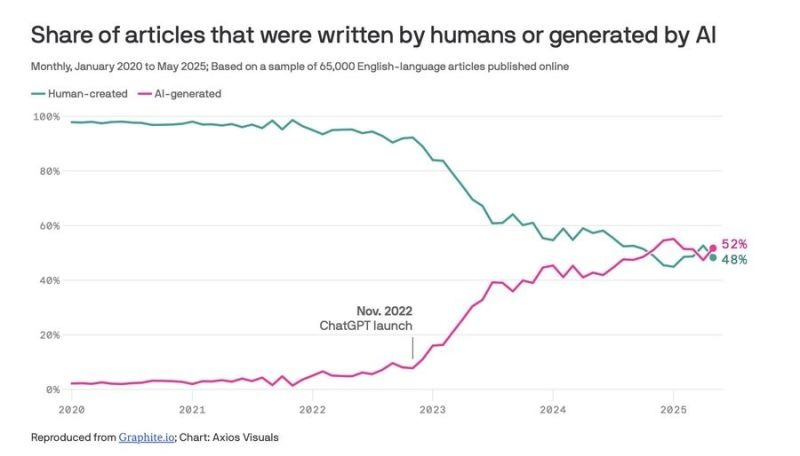
When Paul Adams posted about this stat in October, he stressed the importance of AI leaders recruiting individuals with good judgement, saying:
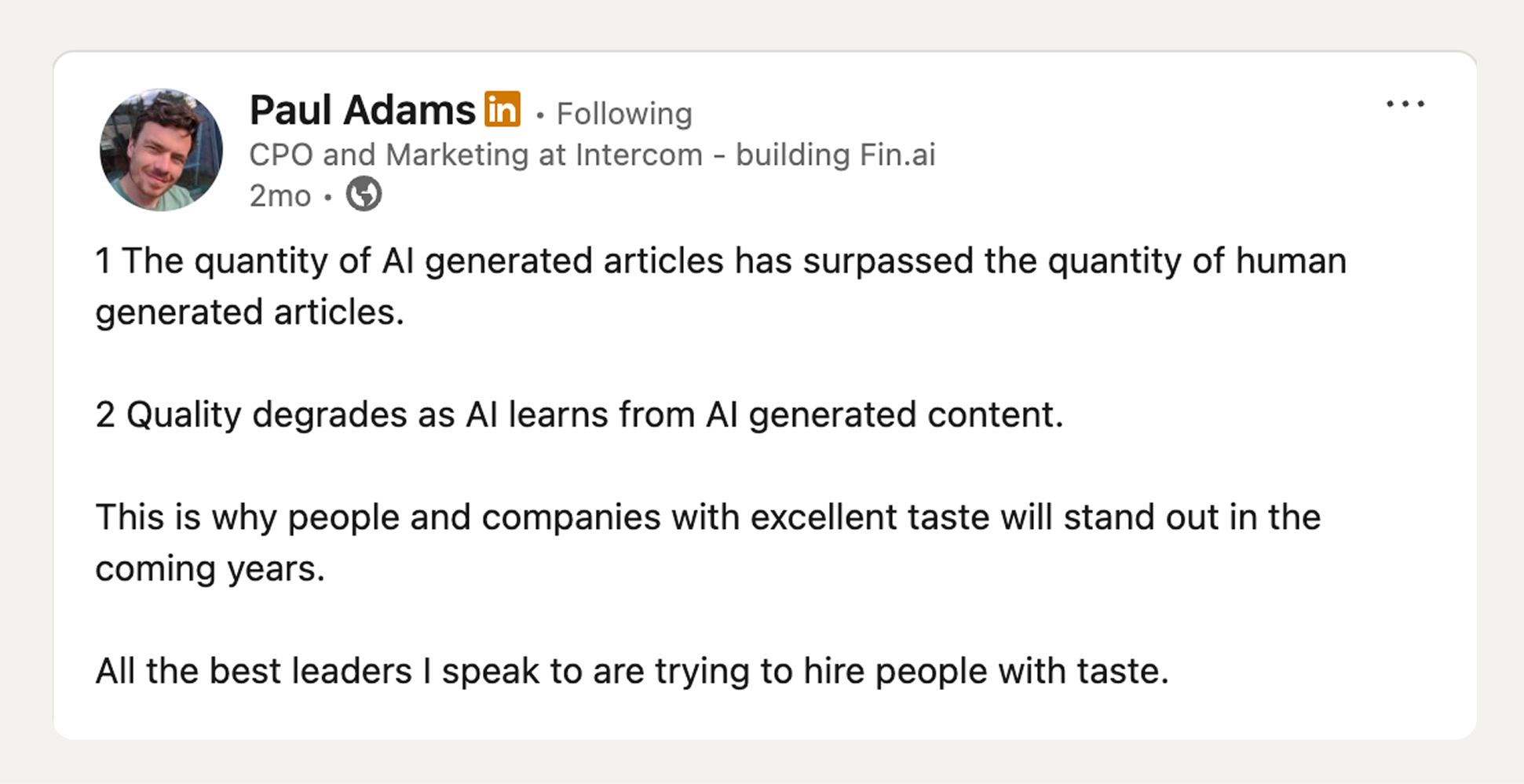
We’ve all heard of the Dead Internet Theory, the belief that the internet will eat its own tail. As AI learns from AI-generated content, output degrades and usefulness goes by the wayside.
In this new world, maintaining customer trust is more important than ever and AI-powered solutions must be engineered for accuracy and authenticity.
3. Customers Embrace AI for Service Tasks
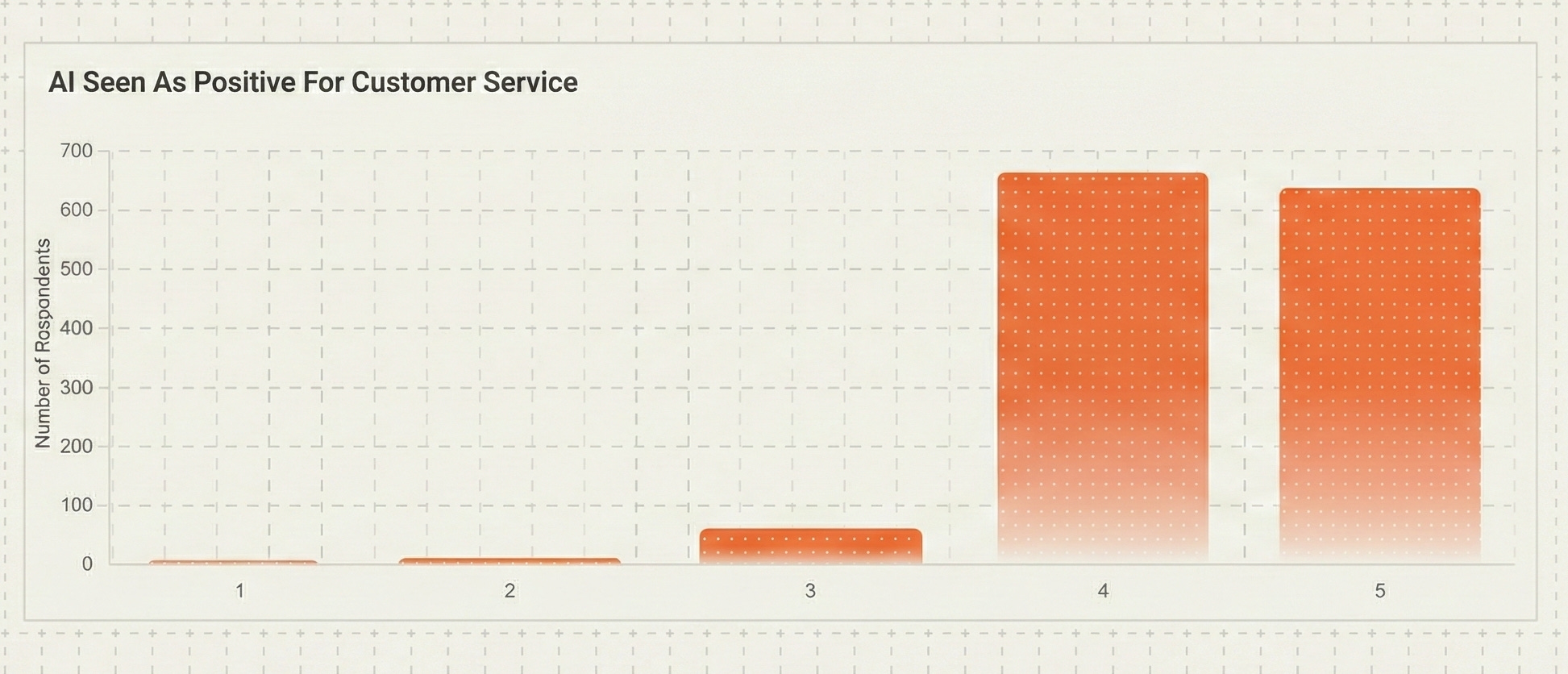
In 2025, many customers accepted or even preferred AI for quick, low‑stakes questions, especially versus long phone waits. Research led by Karen Church, our VP of Research & Data Science, showed a major shift: customers stopped asking “Is this a bot?” and started asking “Can this fix my problem?”
Across the last six months, we surveyed over 1,300 buyers in our ICP to track this change. In 2024, fewer than 29% said they understood LLMs well. Today, 96% report high confidence (average 4.3/5) in evaluating or implementing AI solutions. The takeaway? AI literacy is now widespread, and expectations are higher than ever.
4. New Year, More Resolutions
Customer service resolutions became faster, more dependable, and frequently resolved on the first contact. In 2025, Fin resolved 44,000,000 queries (and counting 📈) and boosted average resolution rate to 76%.
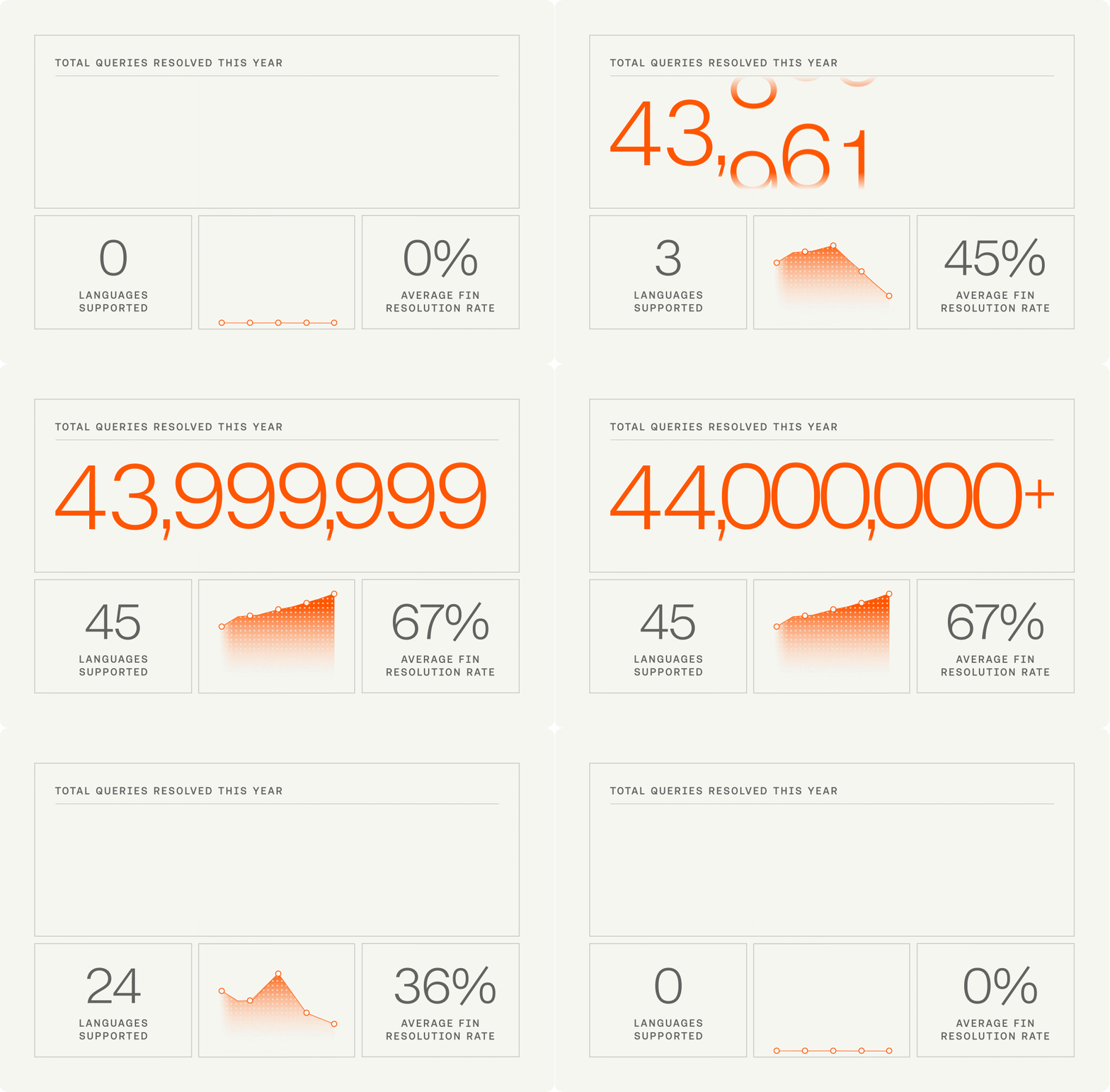
This year we launched initiatives to help customers boost resolution performance and deepen product understanding via the Fin Flywheel.
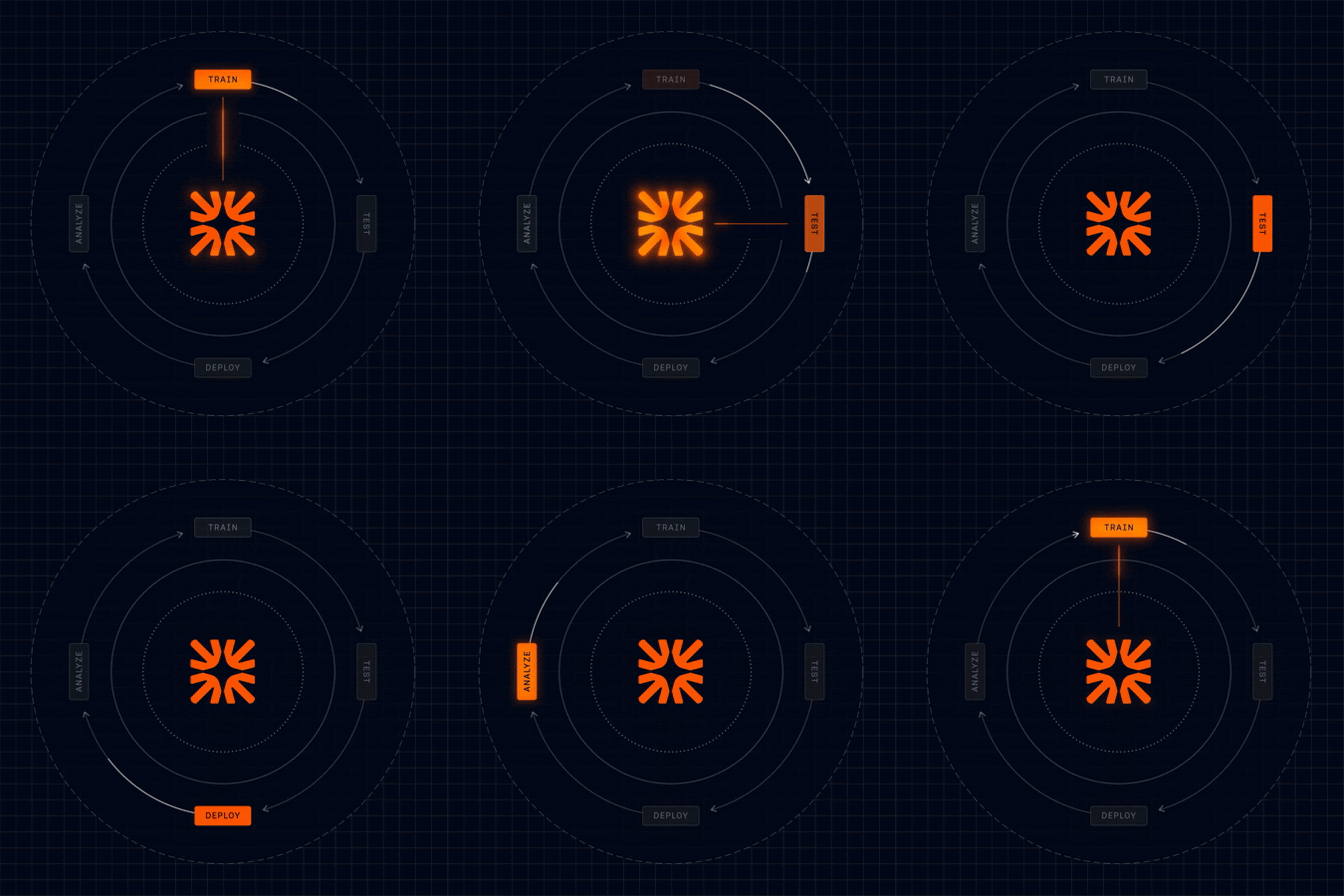
To help Fin achieve even more, we released some of our most ambitious product updates at Pioneer 2025:
Procedures: A new way to train Fin on your SOPs and business context so it can reliably resolve increasingly complex queries.
Simulations: Scalable, AI-powered testing that ensures Fin behaves exactly as expected for any user, in any scenario.
Fin for Slack and Discord: Enabling instant, accurate responses directly in Slack and Discord.
Insights improvements: New CX Score Reasons, curated Topics and Subtopics, improved AI Suggestions.
View the full Fin 3 product breakdown here.
5. Fin Finds Its Voice
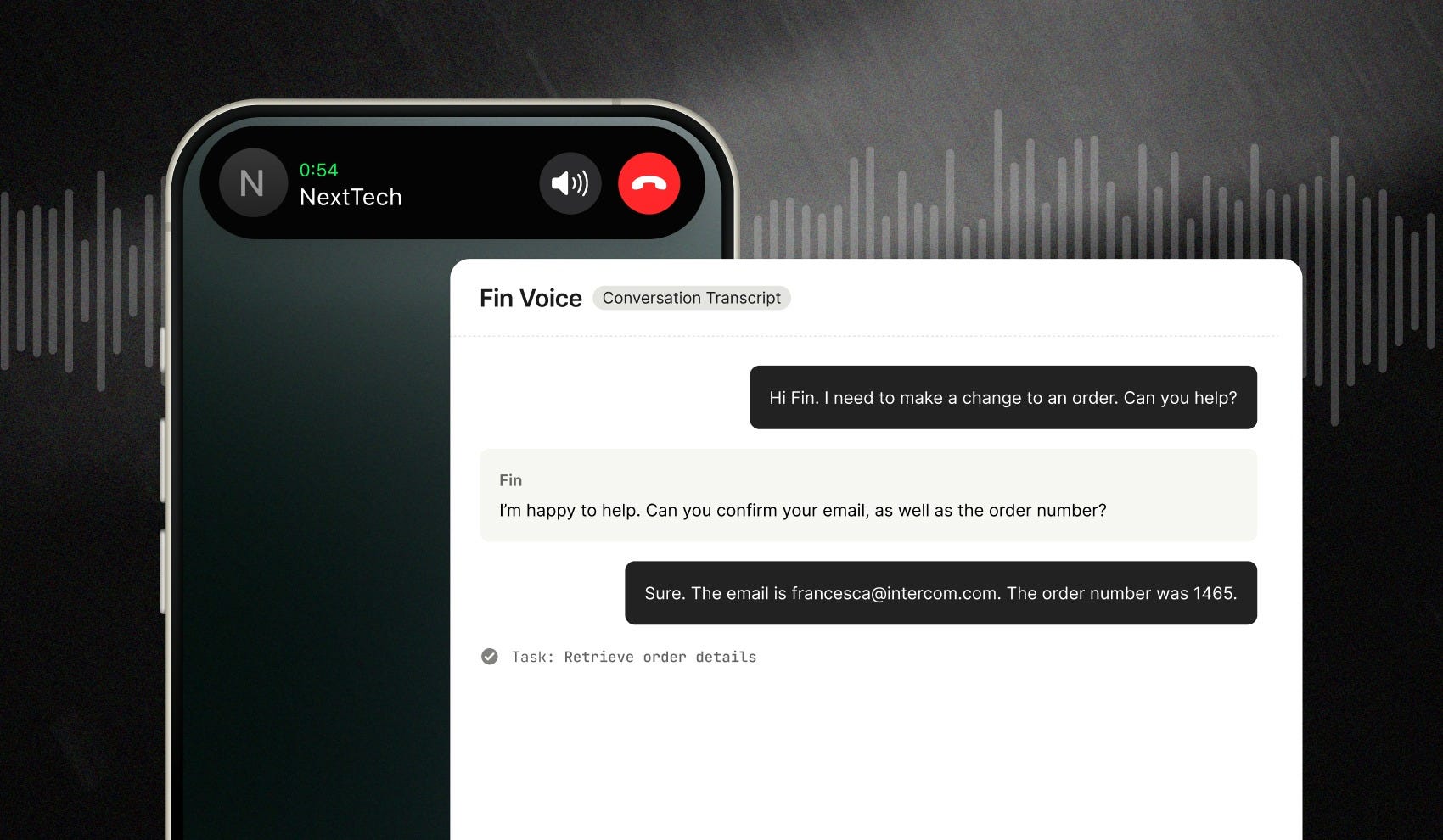
This year we brought Fin to the phone. It now delivers support across voice, Slack, email, and social in a single, unified experience. By sharing the same configuration and knowledge everywhere, companies get one consistent AI behavior and CX standard instead of juggling separate phone bots and chatbots.
Rizwan Sherif, Director of Customer Experience at Credit Repair Cloud even said,
“Fin Voice exceeded our expectations, allowing us to keep phone support running 24/7 without needing to staff agents outside business hours. Customers often tell us they’re amazed it’s not a real person—Fin Voice sounds natural, responds in context, and doesn’t feel robotic at all.”
At Pioneer, Paul showcased a live demo (without pre-recorded or edited content) of Fin Voice handling a complex query.
Fin Voice continues to improve with each iteration. Try it for yourself.
6. AI Customer Service Soars
Menlo Ventures estimates enterprise generative AI spending jumped from $11.5 billion in 2024 to $37 billion in 2025, a 3.2x increase that reflects rapid scaling of AI models in CX and support. Analysts expect AI customer service spend to hit $48B by 2030.
By the end of this year, analysts claim around 70% of customer interactions will be handled by AI technologies, with that share continuing to rise into 2026 and beyond.
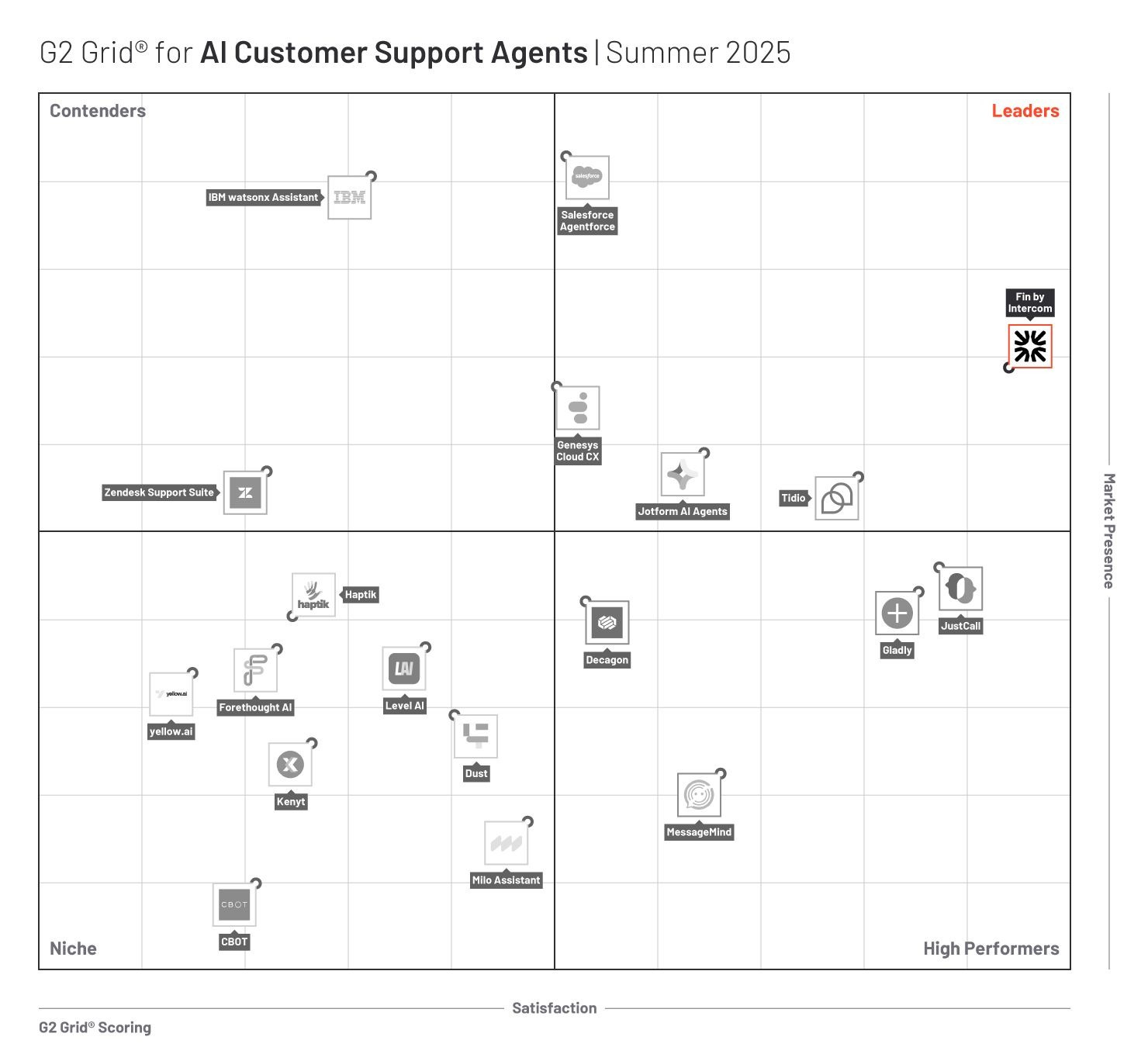
In 2024, Fin became the #1 AI Agent on G2. Ruth O’Brien highlighted that staying #1 meant constantly evolving.
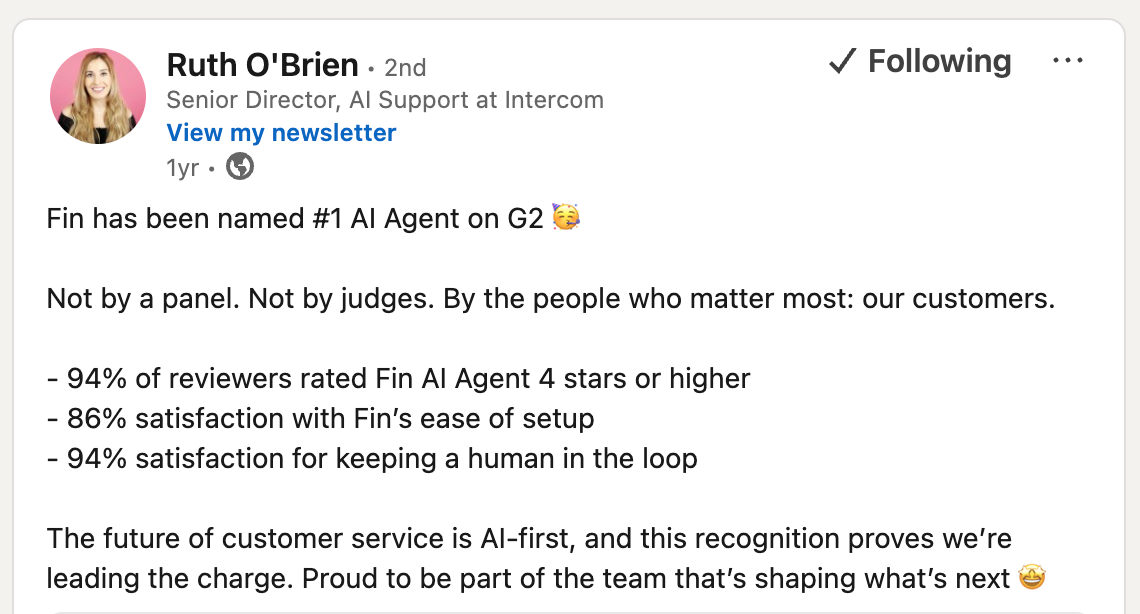
In 2025, we held that title and were named G2’s #1 Support Agent for Customer Service
As Paul mentioned in his October post, G2 rankings are based entirely on feedback from thousands of real users of the products. Fin has the highest score on the Grid, and the highest satisfaction rating in the category.
What’s next?
If you didn’t catch Eoghan’s Keynote address at Pioneer in October, our customers are using Fin for more than just service.

Early mover Lightspeed is implementing it “end-to-end” across the customer journey while Whoop embraced Fin for sales. By answering customer questions and providing valuable buyer insights, Fin contributed to a 130% increase in sales attributable to Whoop’s Inside Sales Team.
These stories are just the beginning and we believe AI Agents will continue to unify the customer experience.
2026 will be the year of the Customer Agent.
•••
Thanks for reading. We’ll be taking a break over the holidays. See you all in two weeks.